Country, community and culture: Keith Stead on 25 years with OCULUS
As he celebrates a quarter of a century with OCULUS, Keith Stead reflects on the projects, people and ideas that have shaped his approach to landscape architecture.
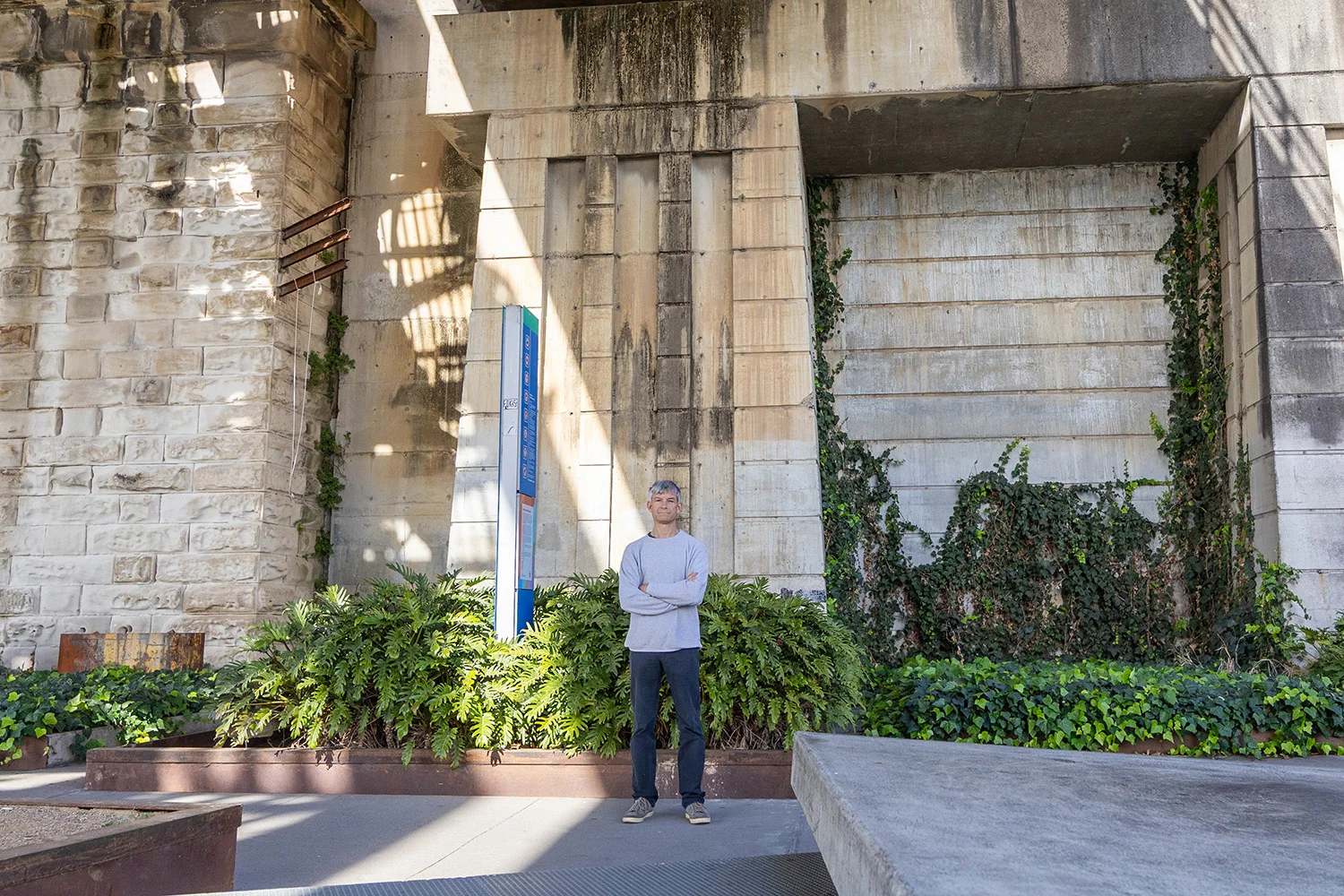
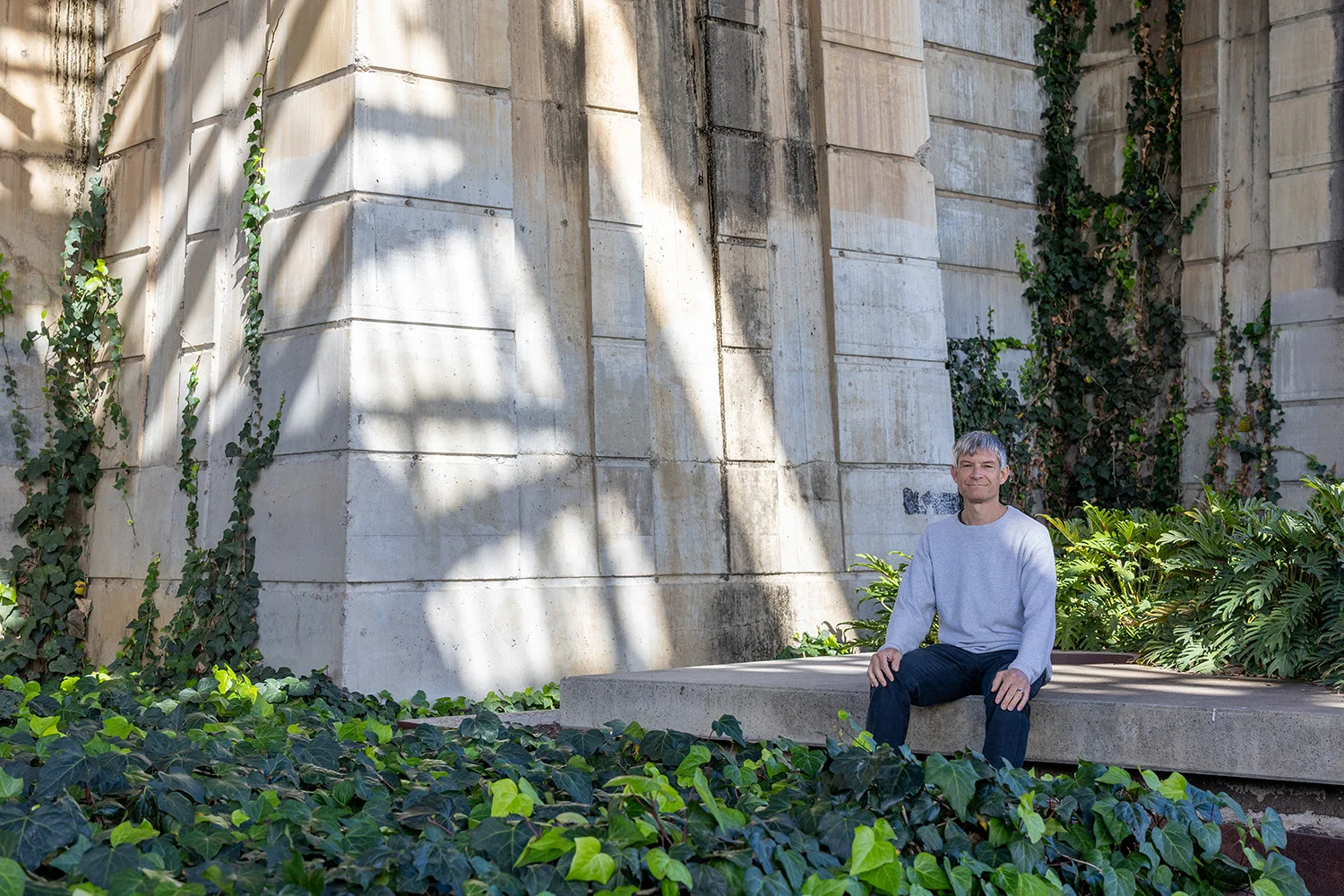
Keith Stead at John Whitton Reserve (Rhodes, Sydney), a project he was instrumental in designing. The open space under John Whitton Bridge won an AILA NSW Award for Design in 2014.
Twenty-five years is long enough to watch an industry remake itself – and long enough to remake a workplace along with it. For Keith Stead, who celebrates 25 years with OCULUS this month, change in his profession – and his professional life – has been a natural and welcome theme.
When Keith joined OCULUS, the studio bore little resemblance to the organisation it is today.
"OCULUS has grown from a fluid, dynamic and at times chaotic environment into a more structured, rigorous and professionally managed organisation," he reflects.
Deadlines pulled together loose teams of staff and students on short notice. Late nights and deadline scrambles were common, and so was the camaraderie that came with them. That informality has given way to clearer systems and more disciplined project delivery, but the culture of team members helping one another achieve project excellence remains.
That throughline – evolving structure, enduring values – is, in many ways, the story of Keith’s own career at the practice. Much of his contribution has come from his ability to hold a project’s intent together across years of change: through revisions and approvals, shifting client priorities and evolving constraints. It’s a skill that rewards patience and one that has made him a steady hand on some of OCULUS’ most complex and long-running work.
A common thread in Keith’s work is that every site deserves to be treated on its merits. Rather than reaching for a signature style or a ready-made solution, his approach starts from the particulars of place – its context, landscape and cultural meaning.
"Good design requires looking beyond the nominal boundary of the landscape and engaging constructively with architecture, engineering, planning and client priorities," he explains. It's an ethos that maps closely onto OCULUS’ own and goes some way to explaining Keith’s longevity with the studio.
Mentoring and influences
Keith had OCULUS in his sights not long after arriving in Australia from the UK. Having studied and worked in Scotland, he spent time travelling through Australia, Asia and Africa. That was followed by an 18-month stint with Clouston Associates (now Beveridge Williams) in Sydney and Darwin.
He returned to the UK but remained in touch with colleagues who had moved to OCULUS and were enjoying working for the studio.
When a chance opportunity presented itself to connect with OCULUS co-founder Bob Earl in Berlin, Keith accepted an offer to join OCULUS’ Sydney studio. It was the start of a long collaboration that now spans a quarter of a century.
Keith says several people have had a significant influence on his career. An early employer in Scotland, Ian White, was an influential early mentor, but he reserves special praise for Bob.
“There aren’t many people who could say, having worked for a company for 25 years, that they genuinely enjoy working with the owner and the founder," Keith says. "He brings something special and unique to every project he’s involved with. His ability to challenge people while bringing a distinctive design perspective to projects has been especially important.
“Other colleagues, such as Roger Jasprizza, Claire Martin and Peta Miskovich, have also provided support, collaboration and professional companionship at different stages."
Projects that have shaped practice
Over 25 years, Keith has contributed to projects that have reshaped parts of Sydney and sharpened his understanding of how landscape architecture can support civic life and community identity.
Rouse Hill Town Centre is one project he says he is proud to have contributed to. Beginning around 2005, the project involved work on both the Rouse Hill centre and surrounding residential areas, transforming it from a greenfield site into a new town centre with a genuine community heart.
"Its strength lies in the idea of a town centre organised around streets and squares, rather than an enclosed mall," Keith explains. "Over time, as the metro station arrived and surrounding sites continued to develop, the place has matured into a commercial success and a place that has a meaningful community focus. It has become somewhere people feel attached to – a community hub rather than simply another shopping centre."
Keith nominates King Street Wharf, Jacksons Landing in Pyrmont and World Square on George Street as other significant achievements. These were substantial and sometimes difficult projects that offered important lessons in client relationships, construction processes, professionalism and resilience.
One Central Park is another that fits that category. OCULUS designed the building's sunken courtyard, façade planting, internal planting and the sky garden on the building cantilever. At the time, delivering that amount of greenery on a building, at that scale, had not been attempted in Australia in anything like the same way. While subsequent issues have complicated public perceptions of the project, he remains proud of the design and technical contribution made by the project team.
"Even difficult experiences provide lessons in how to remain professional and how to draw something constructive from difficult circumstances," Keith explains.
Beyond project work, Keith values his contribution to the profession through AILA, including involvement with the NSW Executive and the CPD Education Committee. He has also valued serving on design review panels, which he says have sharpened his ability to critique projects constructively and helped him understand the bigger-picture issues that influence design quality.
Those experiences have fed back into Keith's OCULUS projects, helping him understand what review panels are looking for and how to navigate review processes effectively. They also reflect a commitment to the wider profession and to improving design quality across New South Wales.
Connection with Country
Keith credits the alignment of his own values with those of OCULUS as core to his long tenure with the studio.
Take the growing focus on Connection with Country, which he considers to be one of the most significant developments in Australian landscape architecture in recent years.
"Connecting design with Country has been a hugely positive change – and one that OCULUS has meshed with its approach to the natural landscape.
"Landscape is inseparable from Country, adding cultural depth and strengthening local identity," Keith explains. "The shift has strengthened the confidence and identity of Australian practice, moving it away from reliance on European or North American precedents and towards a more grounded, place-specific design culture.
"There's no other place in the world that has the amount of cultural knowledge extending so far back that we have in Australia. It's been a great time to be a landscape architect when you think about it."
Sustainability, endemic planting and climate responsiveness are all closely linked to the growing connection of design with Country. Keith remembers early OCULUS projects using a mixed palette of exotic and native species, while most projects he works on now have a stronger focus on native species, particularly those that are locally endemic. It's a shift that Keith says supports sustainability, strengthens connection to place and responds more directly to local environmental conditions.
Care, evidence and adaptability
Looking ahead, Keith expects that putting Country at the centre of the design process will continue to prompt improvements in our built environments, particularly how we approach sustainability and climate adaptation.
At the same time, climate change will continue to ask difficult questions of us. If local climate patterns shift, some endemic species may no longer perform as expected in places where they have traditionally belonged. Designers will need to respond with care, evidence and adaptability.
Urban heat, canopy cover, deep soil and water-sensitive urban design will remain central issues, alongside rapid densification driven by housing demand. Responding to these pressures may seem like a basic principle, Keith says, but integrating them meaningfully into dense urban projects will remain a challenge.
"One of the biggest opportunities we have in the immediate future is to look at parts of our cities that are densifying very rapidly, or have the potential to densify very rapidly," Keith says. "That’s when I ask myself what I can do, in my role as an SDRP member or when leading a project, to push for better design outcomes."
"Addressing those challenges is when I find I can draw on my knowledge of the built form, landscape and public spaces to achieve the best possible environments for people to live, work and recreate in."