Guide to Growing a Woody Meadow
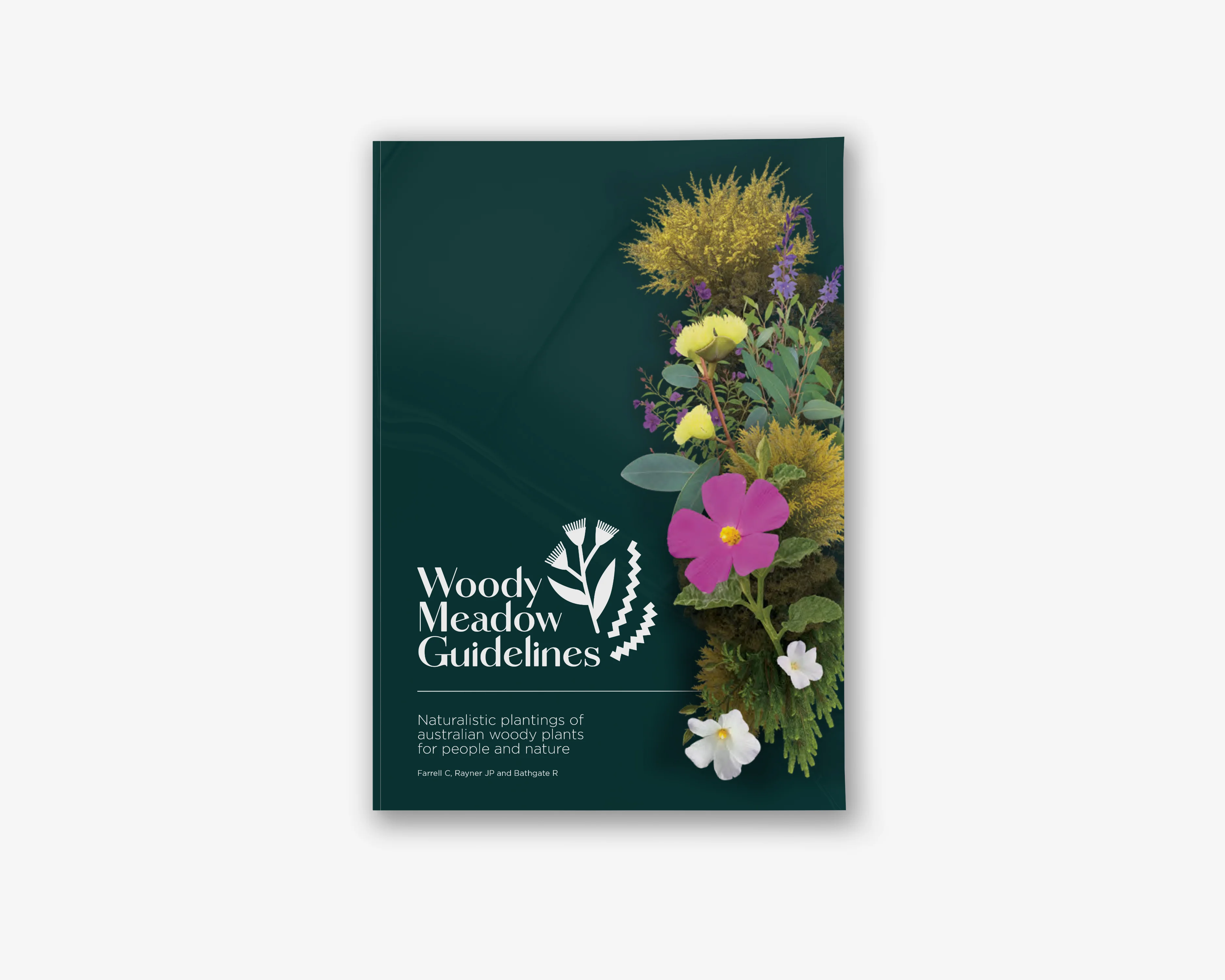
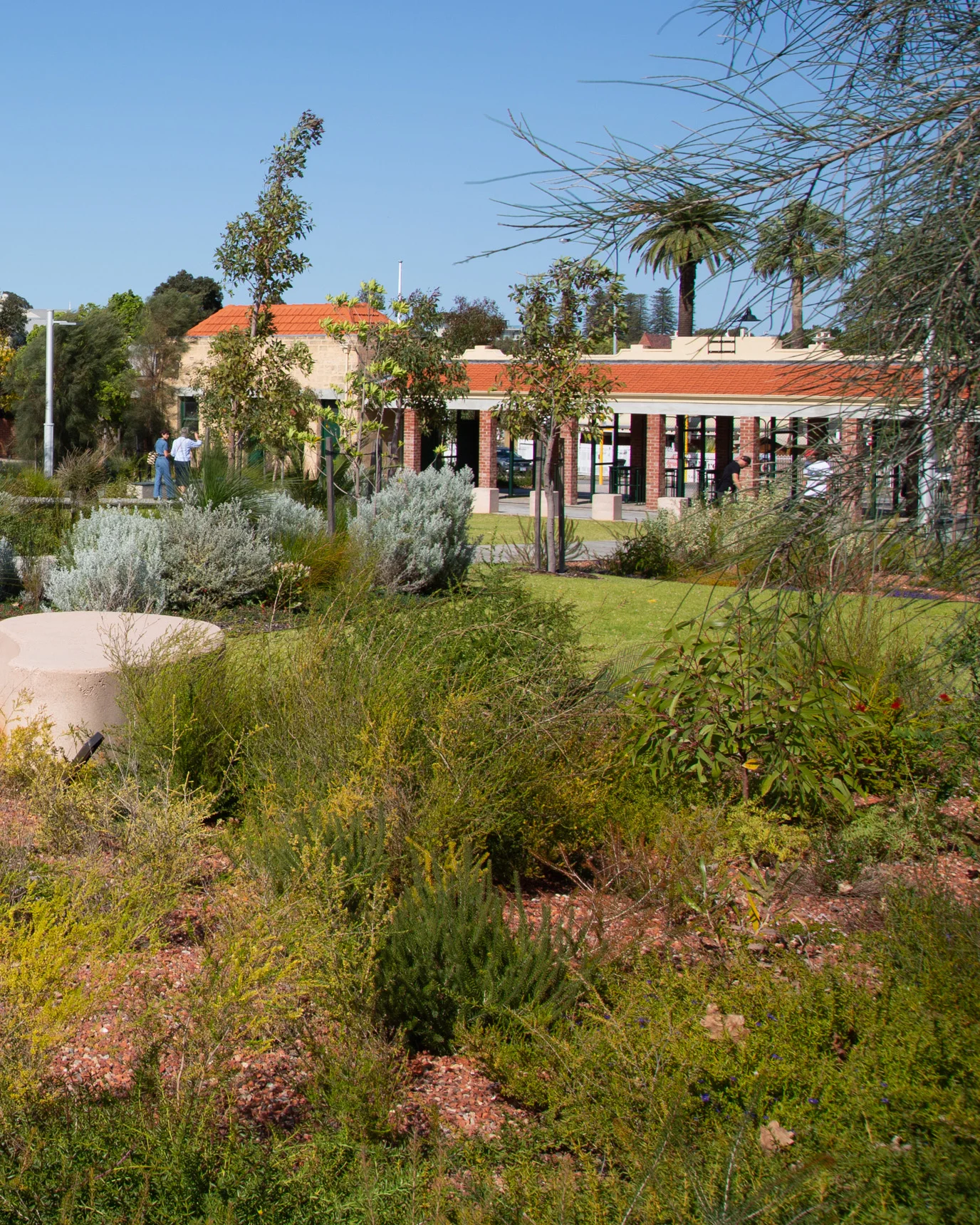
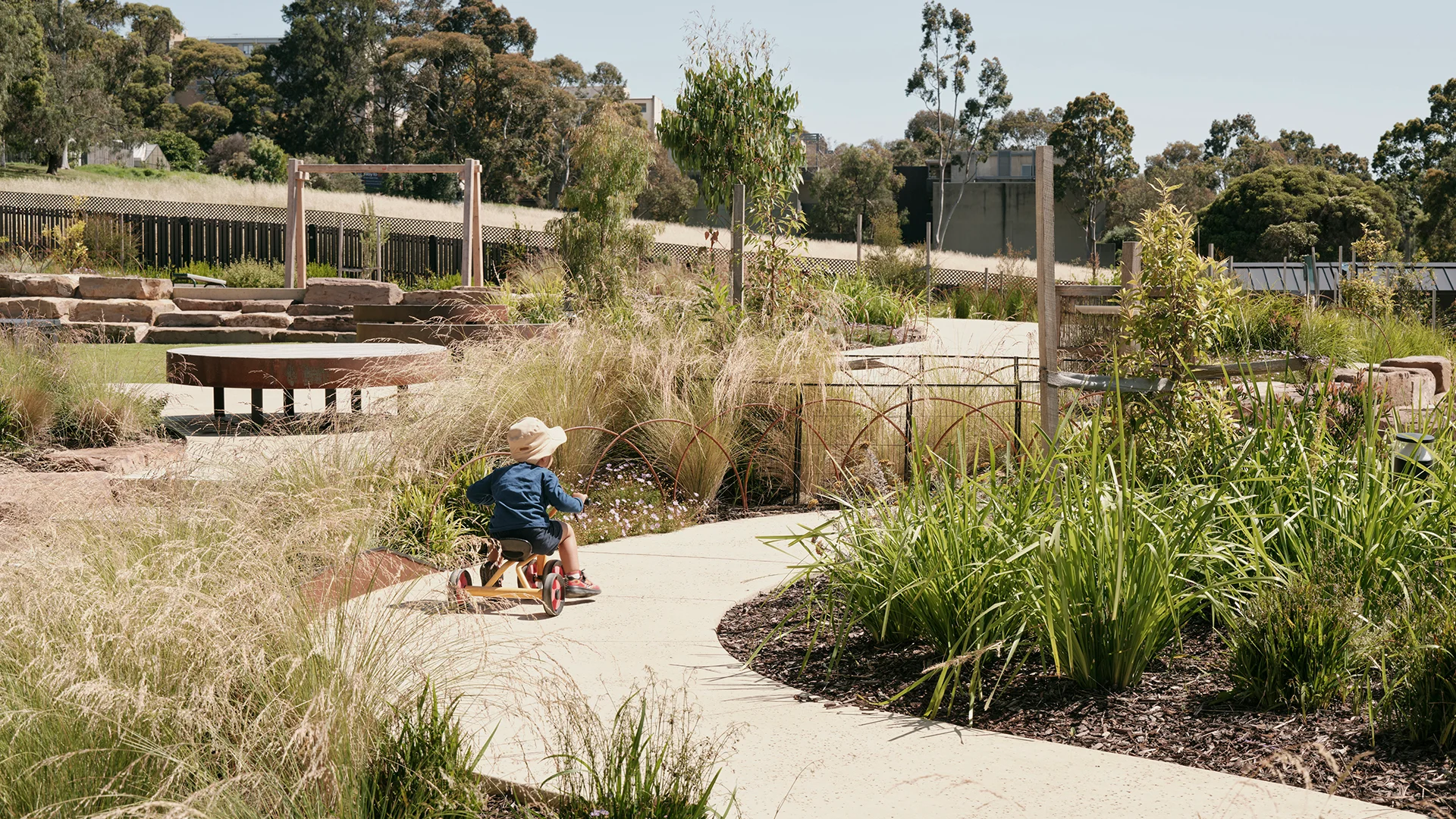
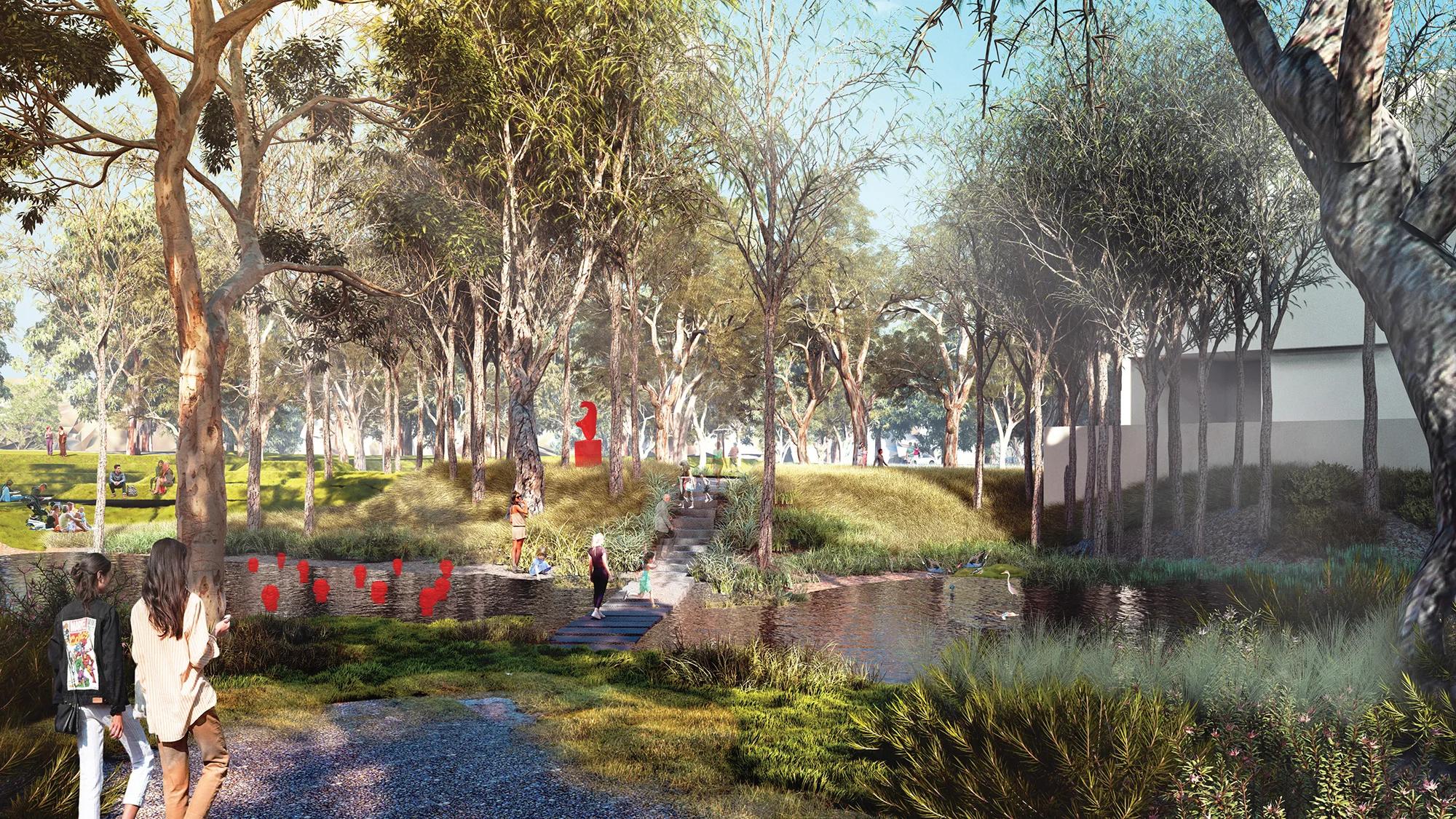
Above: Woody Meadow Guidelines. Below: The Oval at Subi East, designed in partnership with UDLA, by Yvonne Doherty.
The Woody Meadow Pilot Project – a collaboration between University of Melbourne, University of Sheffield, and Royal Botanic Gardens Victoria – investigated whether Australian shrubs could be used to improve the appearance and function of low-maintenance landscapes. OCULUS relished the opportunity to participate by trialling this method on several of our projects, including Subi East, Northern Memorial Park Depot, and Seafarers Rest Park.
The Woody Meadow Guidelines: Naturalistic Plantings of Australian Woody Plants for People and Nature has now been published, explaining how to design, install, and maintain woody meadows.
Now growing in popularity, a while ago our former colleague Molly Coulter sat down on behalf of OCULUS with Claire Farrell to discuss the origin, role, relationships, and techniques of the woody meadow:
Molly Coulter: What is a woody meadow?
Claire Farrell: It is a flexible concept but there are some core elements it has to have – it needs to be managed by coppicing, it has really tight planting densities, it’s made up of layers of all Australian native woody plants, the actual types and what’s in it are really flexible according to the application. Coppicing, spacing, woodiness and the idea of using mineral mulches make them low maintenance. Low maintenance is central to the whole concept – and they’re diverse!
MC: Meadow-style planting has grown in popularity since being showcased at the London 2012 Olympic Games. Talk us through some of the similarities and differences between a meadow you might find in London compared to an Australian woody meadow?
CF: One similarity with the London Olympics approach is they both involve James Hitchmough. They both come from a point of research informing design. Which is a bit unique. It doesn’t happen all the time. The original Woody Meadow Project started in the City of Melbourne and was a response to the seeded flowering meadow that they had played with. Well, that’s not really that low input. It’s dramatic and people love it, but you have to irrigate it, you have to reseed it, you have to fertilize it. So, in terms of input, it doesn’t reflect the naturalness of it, it’s not as carefree as it seems. Really for the Australian context, it’s about those inputs around water and nutrients.
We’re very cheeky in the way we use the term ‘meadow’. Meadows are herbaceous and grassy – and we’ve gone in the completely opposite direction! ‘Meadow’ is so romantic, and people really connect with it.
MC: A number of Woody Meadow Projects are streetscapes or parks are in collaboration with City of Melbourne or other Victorian councils. What is it about the woody meadow that is appealing to this clientele?
CF: The City of Melbourne has always been aspirational and in the ‘green space’. To me, it’s the uptake by the councils who historically haven’t been able to achieve those things that is exciting. Working out west, there is not as much water and they’ve got more space to manage so they can’t afford to do a lot. The teams involved in urban greening and biodiversity are really keen because it is new and interesting and exciting, but they also know it’s low risk. They feel like they’ve got lots more opportunities to play. You know you’re onto something when you can convert the engineers in the room!
MC: How have you found the public to respond to woody meadows? How does education play a part in the design?
CF: John Rayner has a favourite story that he tells… There’s the night noodle market at Birrarung Marr. John remembers being bailed up by this security guard that was manning the gate. He said to him, pointing at the test plot. ‘What is that? I don’t know what it is, but I just like it’.
It’s that thing about art. You know how there is always that kind of natives/exotic divide with plant people? I feel like it’s a project that gets beyond that because even people who are die-hard exotic fans love it… Probably because of the Alyogene. As long as you’ve got some flowers, it doesn’t matter what you do.
MC: We are currently working together on a project where we swapped out some areas of lawn for Woody Meadow planting. There are some real advantages in terms of maintenance and aesthetic, but could you tell us a bit about the environmental benefits of the Woody Meadow?
CF: Obviously more omissions from mowing a lawn regularly compared to coppicing which is only every couple of years. I think just having more diverse things. It’s habitat. Even though it’s not tree hollows and that kind of thing. It’s different habitat. I don’t know if I should say this, but I think it’s really good for spiders. Whenever we do our experiments at Burnley and we’re chopping up our plants to see how they grow and how they respond, the amount of spiders we find is just insane. And lots of different ones. So there are obviously lots of different habitats in bark and the leaves.
MC: We consulted the maintenance teams early in the design development stage of our project to gauge their interest and foster investment and connection with the woody meadow concept. How important is it to plan maintenance for woody meadow planting designs?
CF: Super important. I think having that upfront conversation is good because it goes against everything they have been entrained. If you’re doing something new that is against the rules that they know, you have to go on a journey with them.
I think probably for too long people have hidden maintenance and acted like it doesn’t exist. And gone, ‘here’ achieve this. And then when there’s no maintenance to make it happen, it fails and looks terrible and cost more money. So, I think bringing that conversation up early and going actually this is what you’ll need to maintain it and it will look like this and it will be beautiful.
Read more and find out how to contribute to the research in The Conversation.