Cape Solander
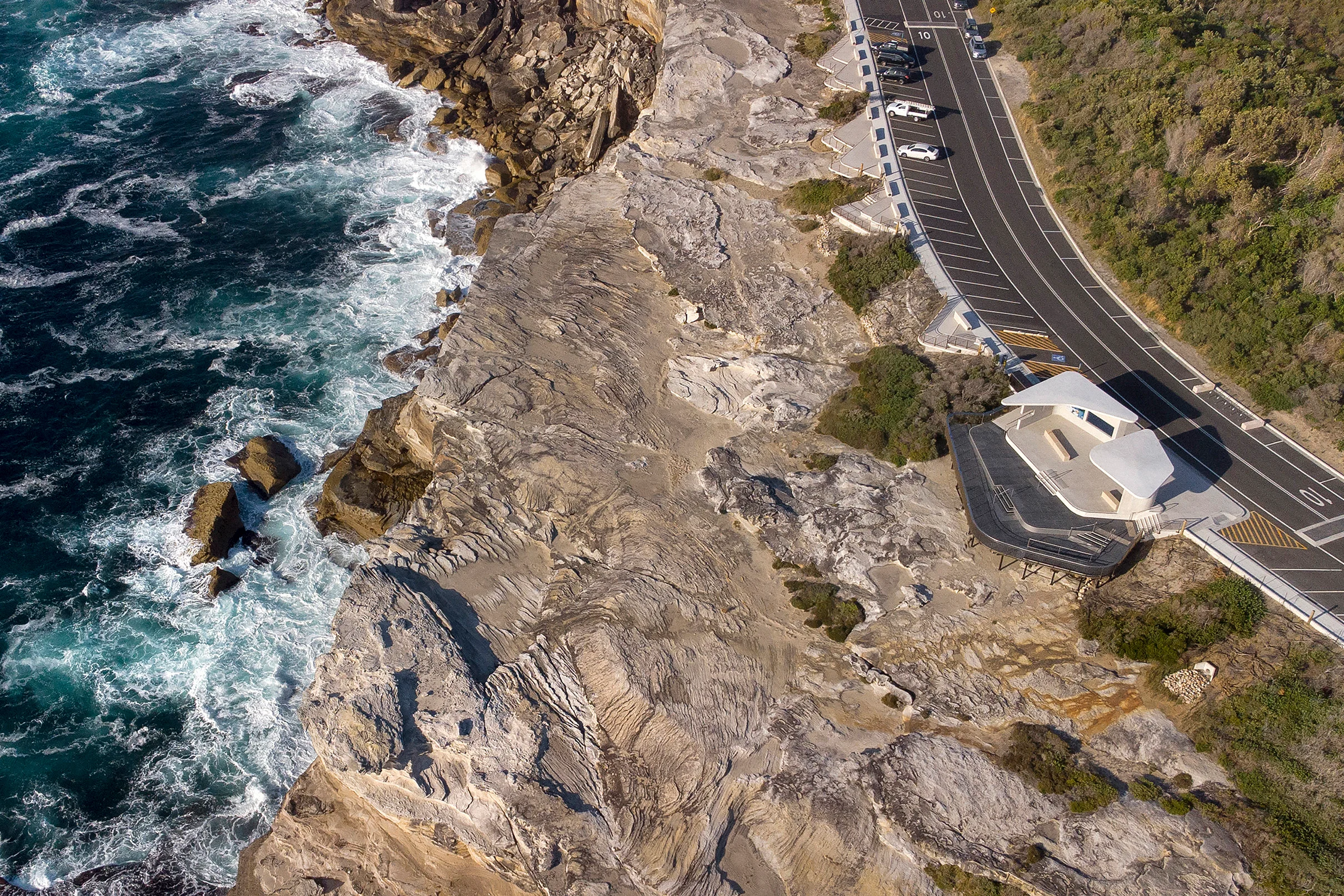
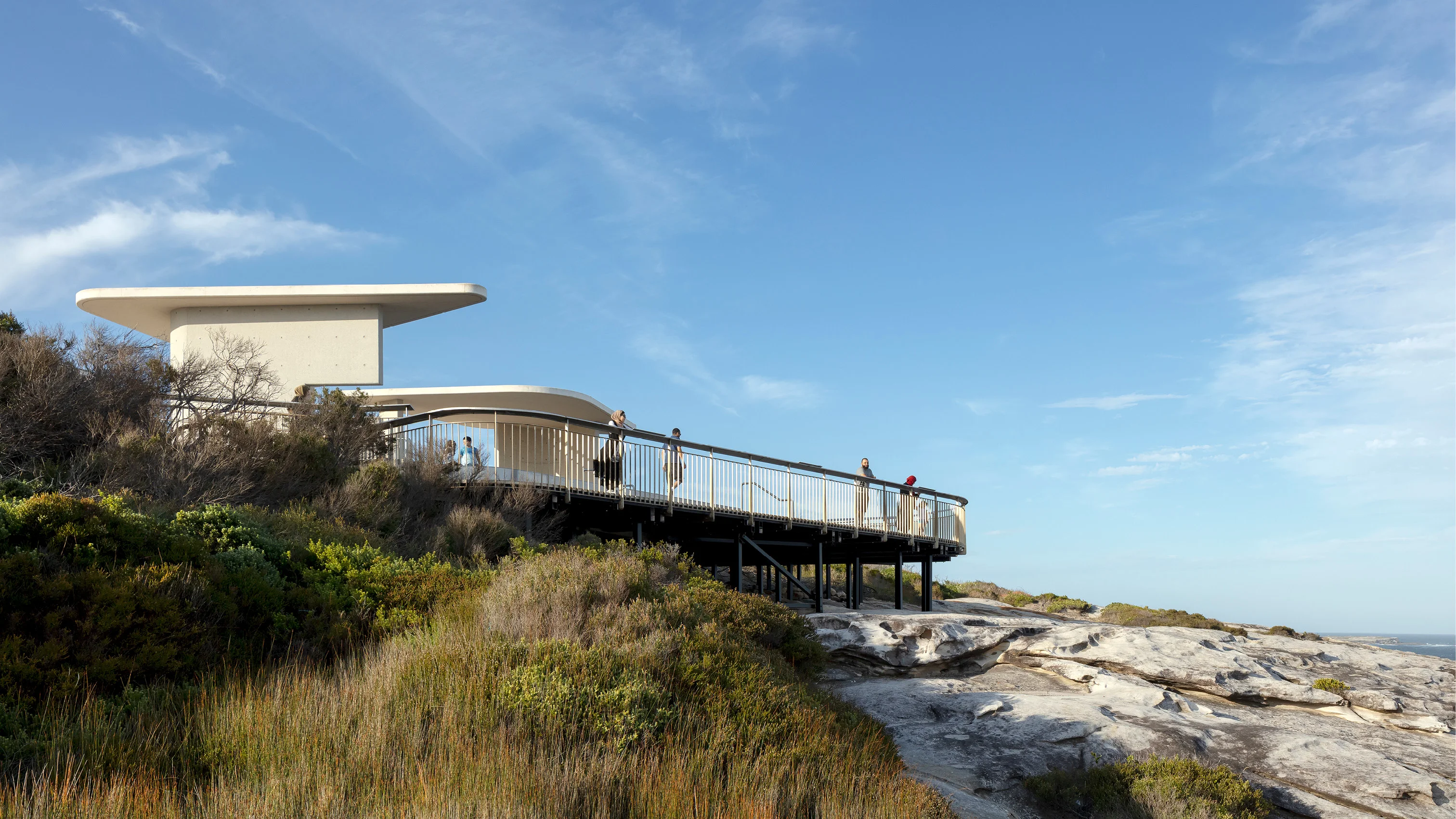
Contemporary forms blend into the natural landscape, providing a safe and accessible experience for visitors.
Simon Wood
Simon Wood
Simon Wood
Simon Wood
Simon Wood
Cape Solander, in Kamay (Botany Bay) National Park, is one of Sydney’s best whale-watching spots – and a significant area in Australian history, bearing witness to the first contact between Aboriginal Australians and the crew of James Cook’s HMB Endeavour in 1770.
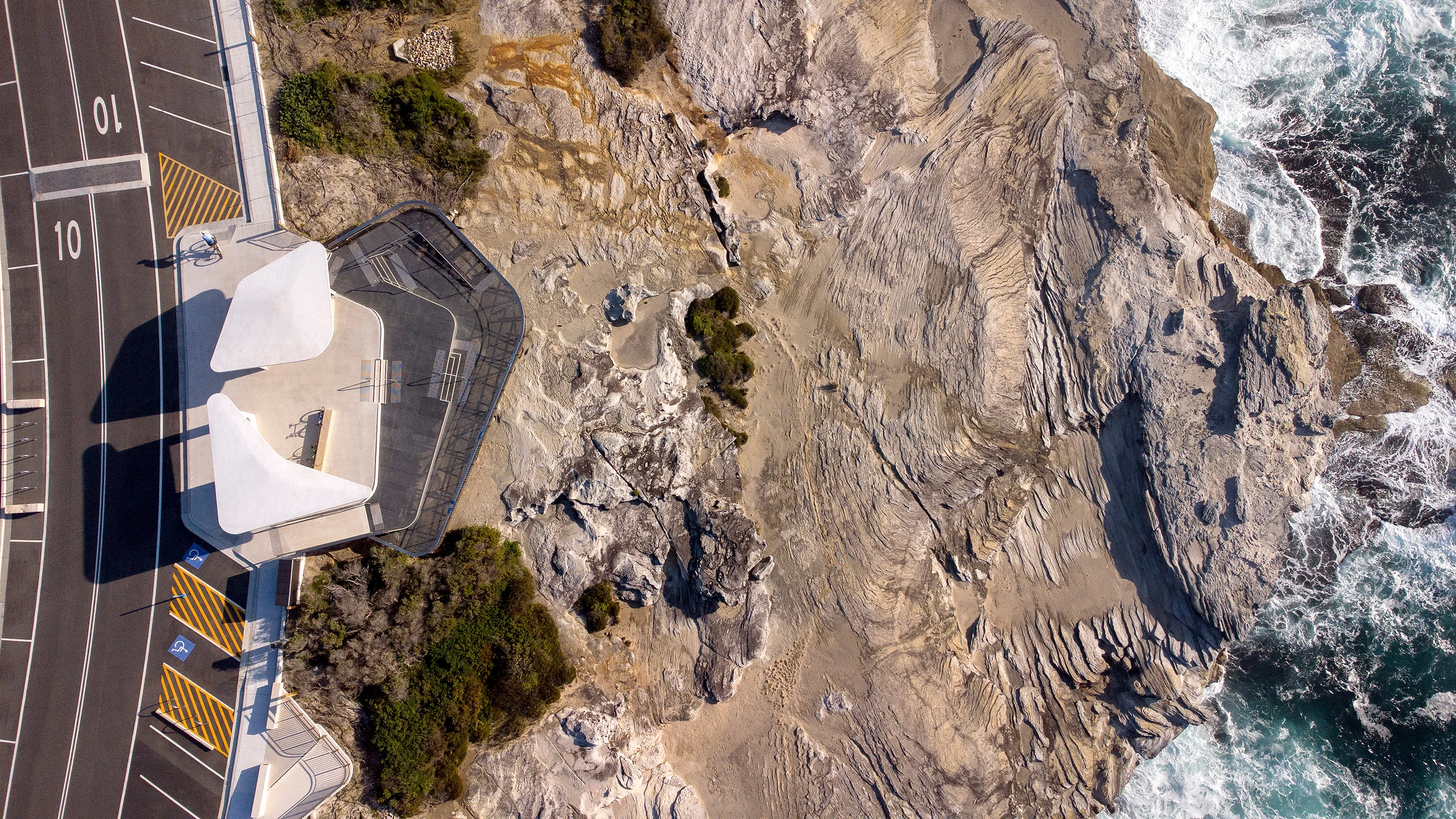
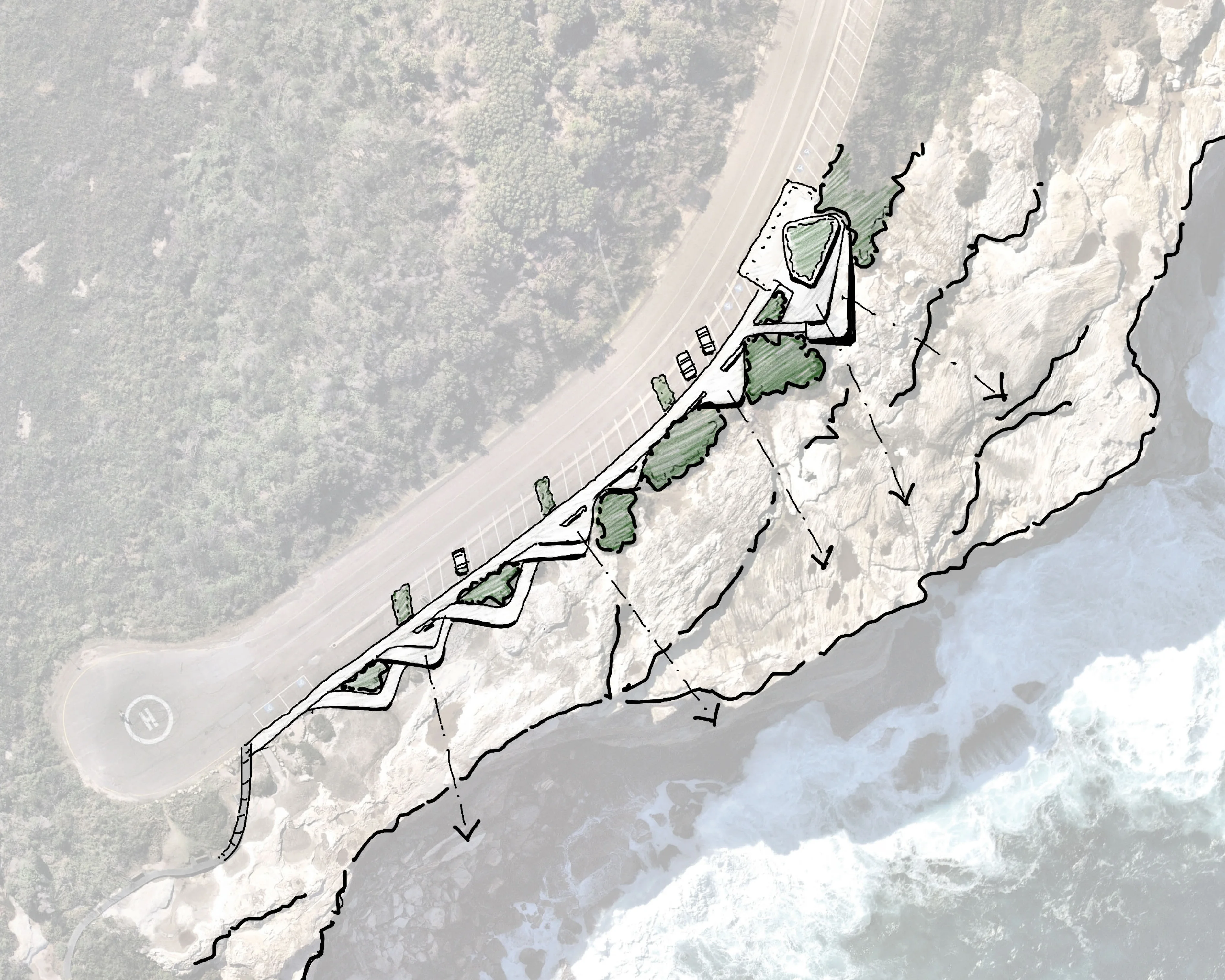
The picturesque headland site, located within a landscape conservation area, holds unique cultural, heritage, and scenic values. It also provides a starting point for a coastal walk linking to the Cape Baily track.
The sensitive coastal heathland environment is exposed to salt-laden winds, driving rain, and scorching sun. The pre-existing shelter had become structurally unsound and did not accommodate large crowds of visitors. Consequently, the surrounding landscape had become highly degraded.
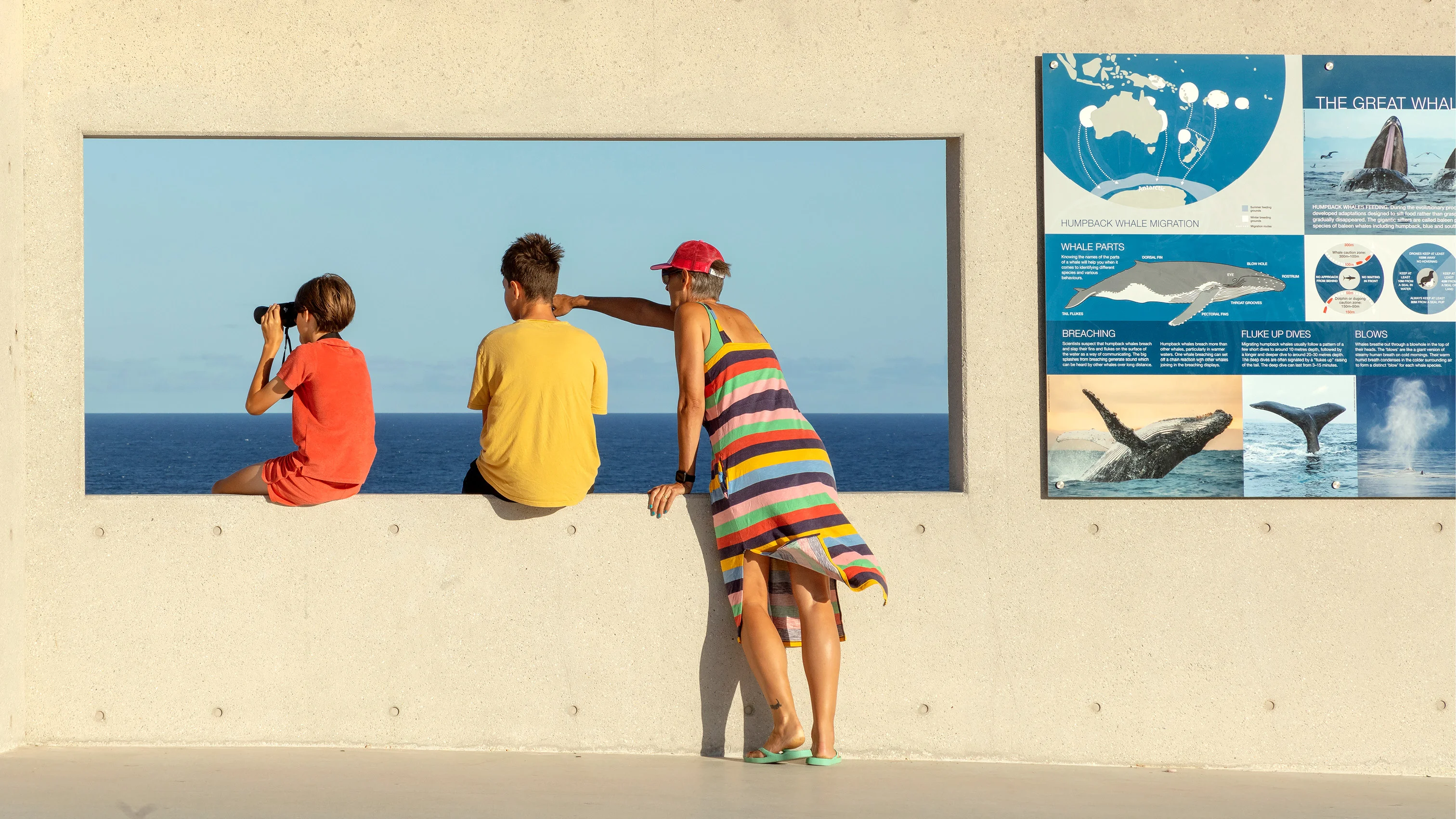
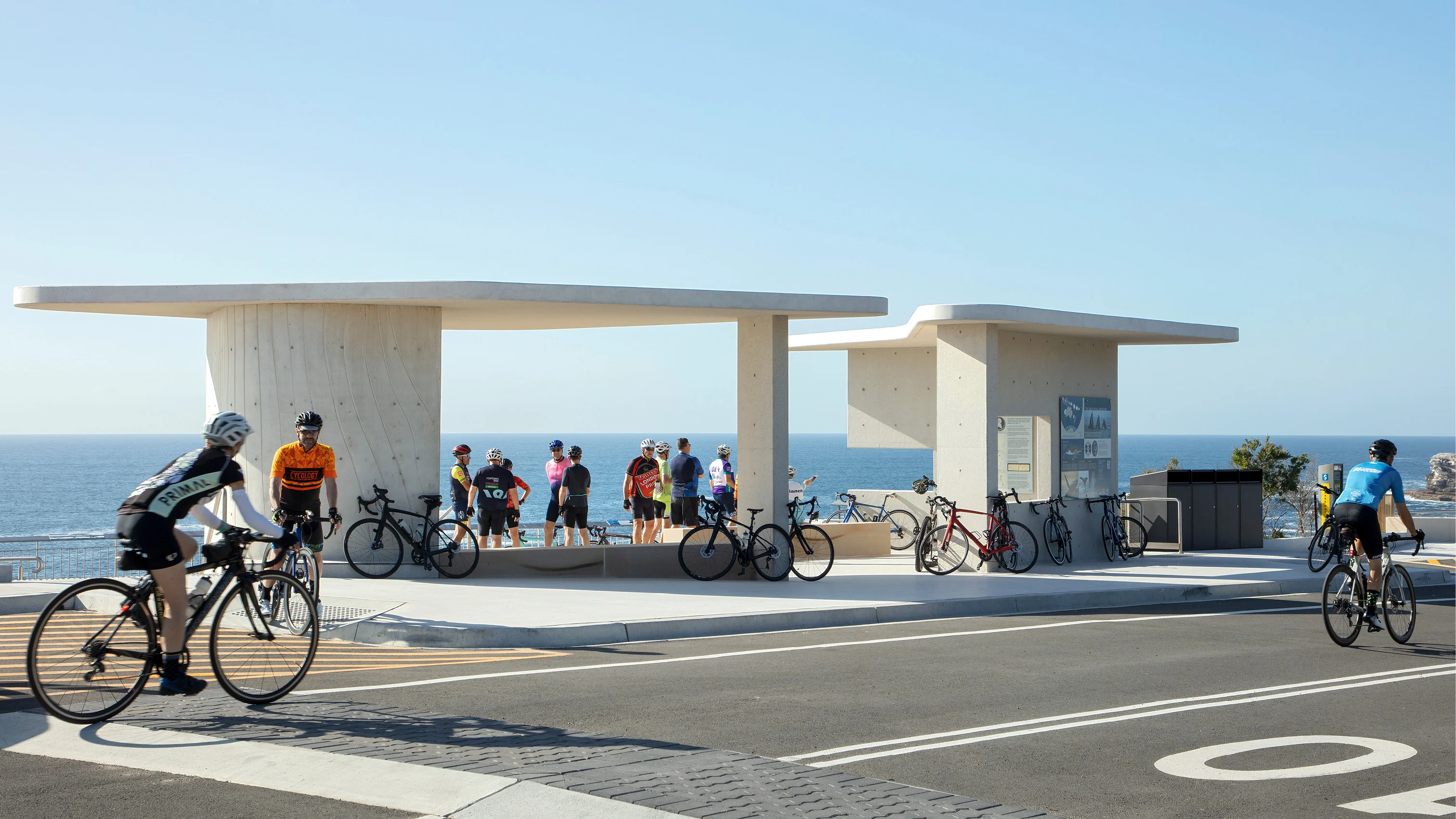
Our brief was to design a utilitarian lookout, with a durable yet light-touch approach and improved safety, which also served an interpretive function. The project scope also included improvements to the car park and a series of bleacher platforms to cater to the growing number of visitors.
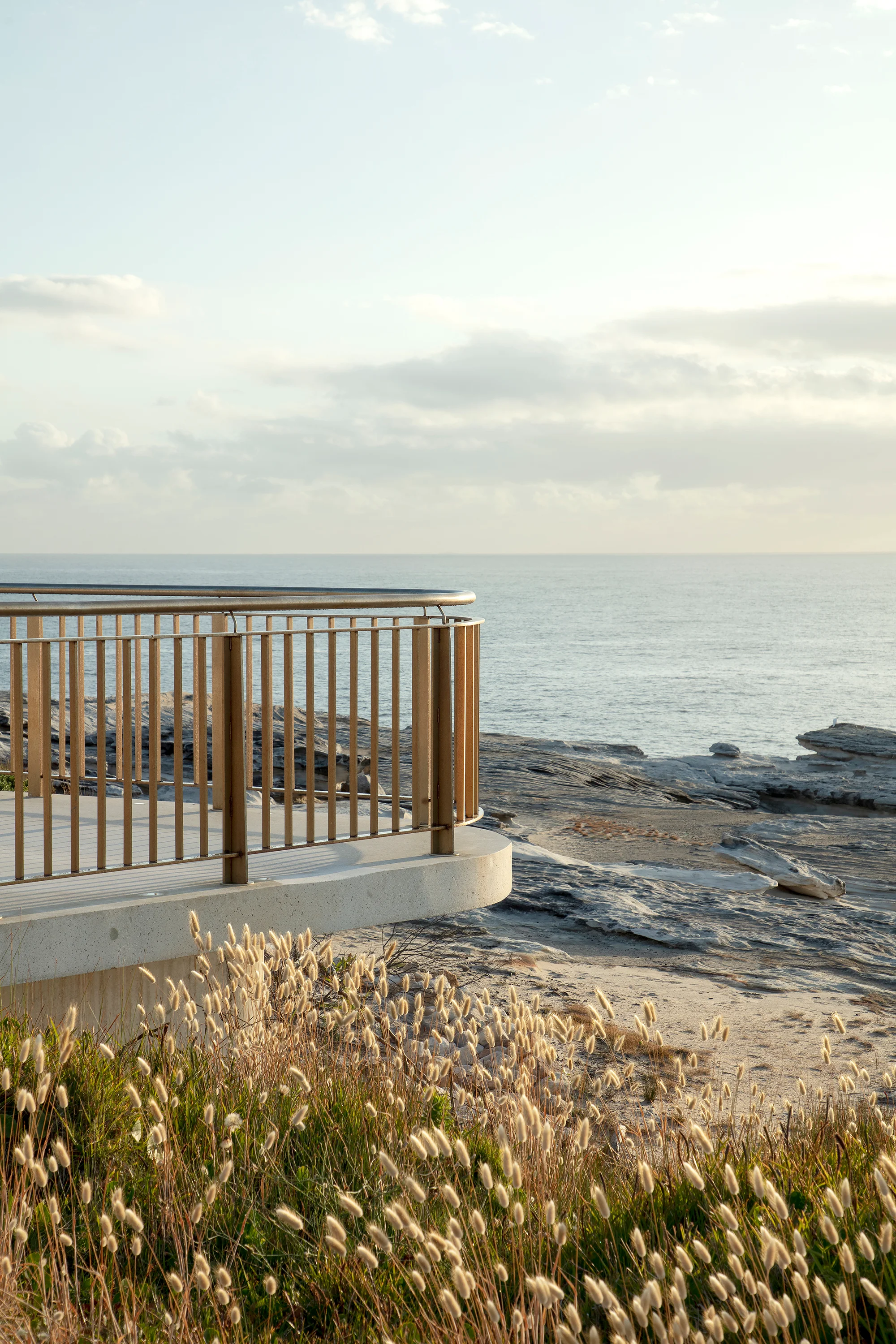
The project was designed to have a minimum 100-year design life, with robust materials that would stand up to the challenging climatic conditions at Cape Solander.
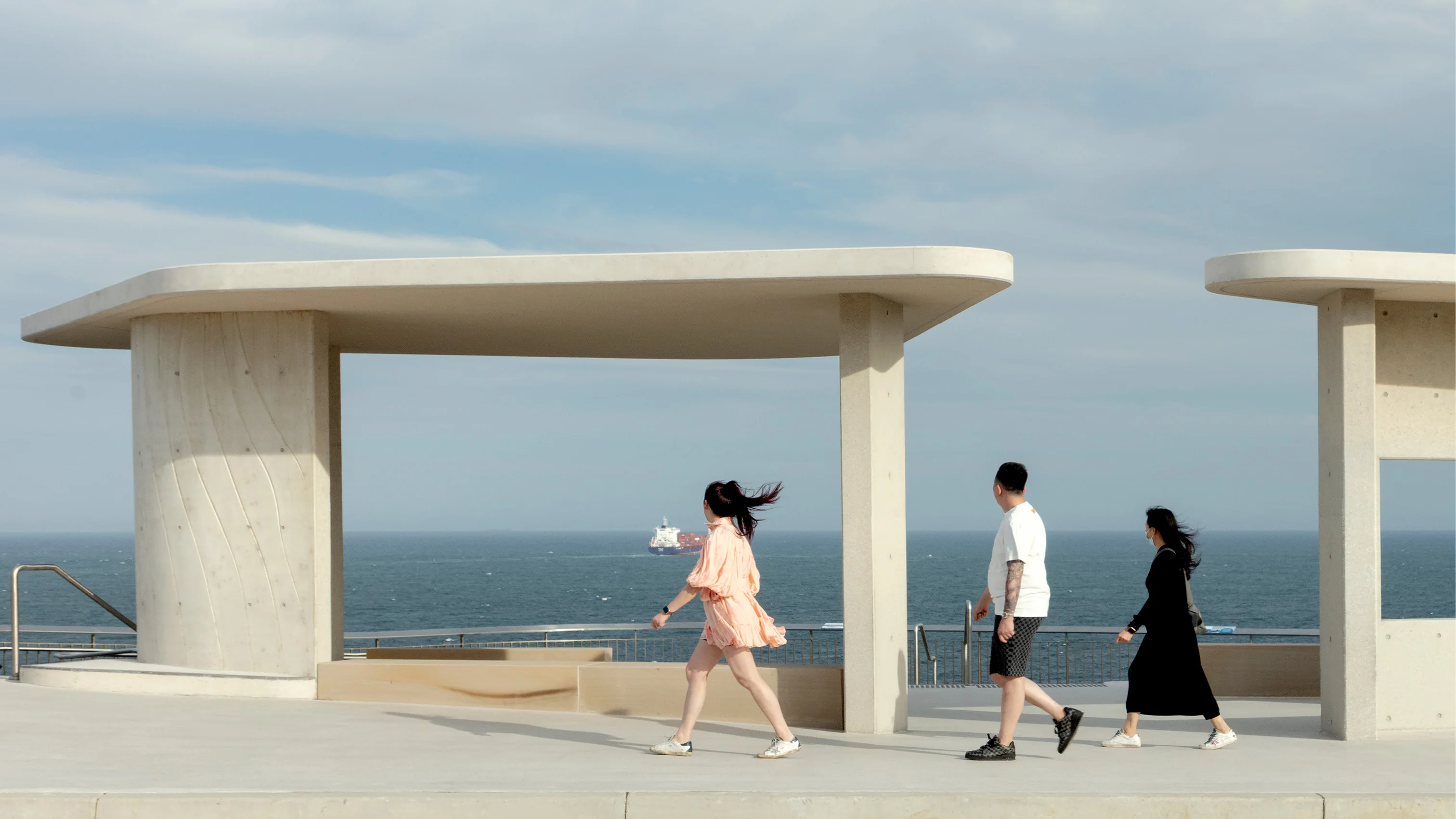
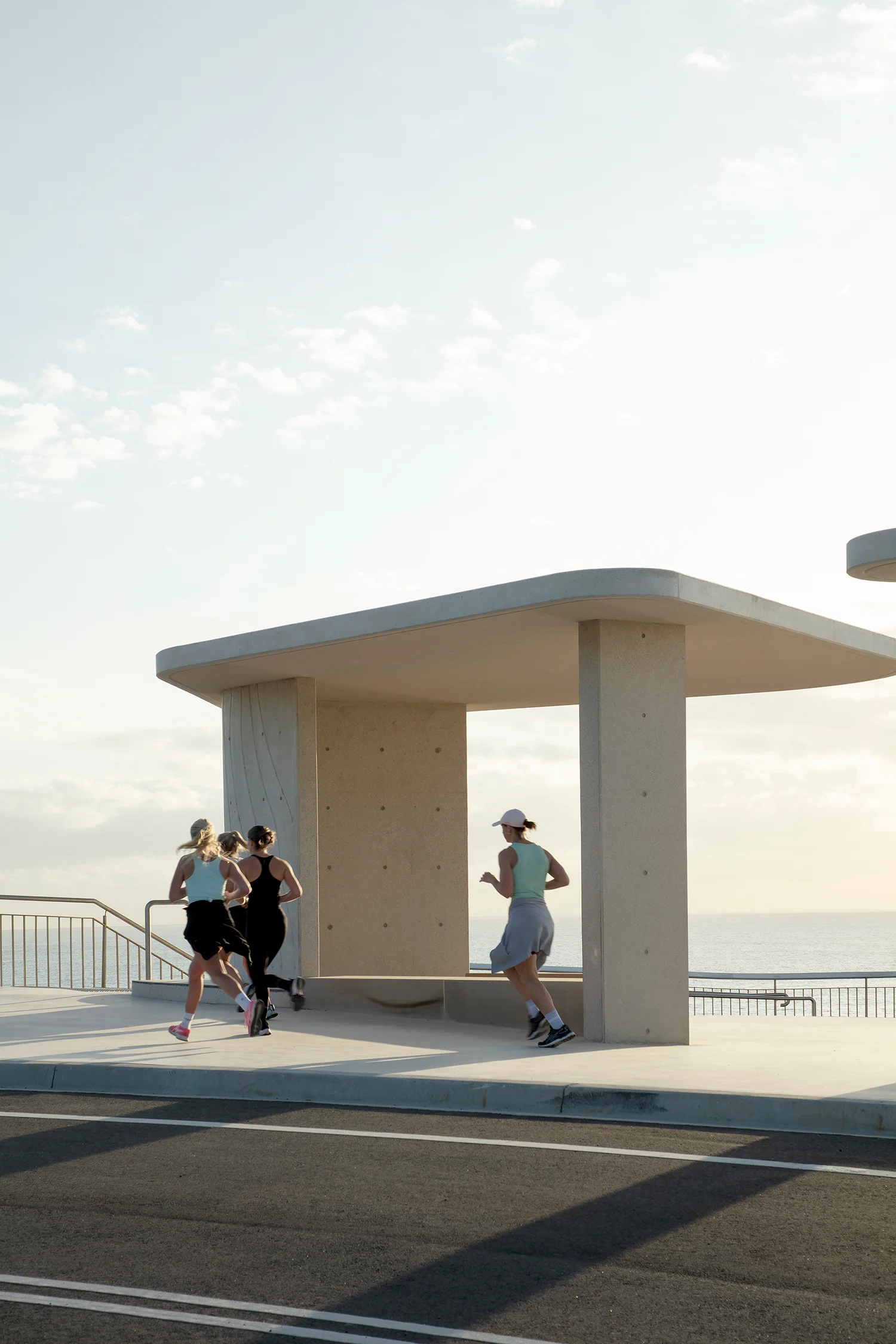
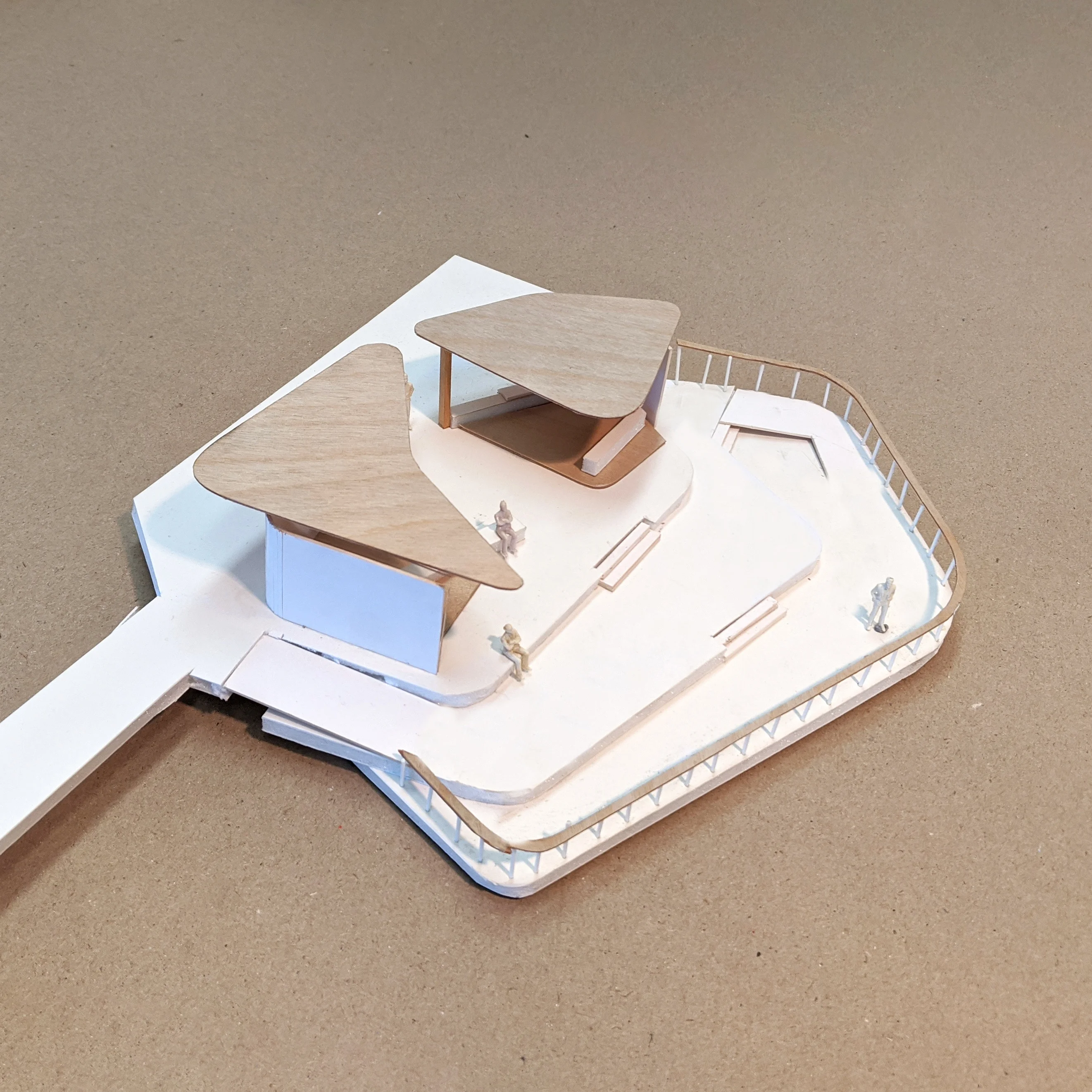
The form of shelters suggest passing whales while also offering wind protection, framing views, and providing a fully accessible facility to allow more people to comfortably enjoy this place. New interpretive, danger and wayfinding signage also improves the experience.
The terraces take their cues from the sandstone geology of the site, seeking to blend contemporary forms into the existing landscape, providing a variety of options for visitors to enjoy the expansive vista without interrupting views from the car park. The design also restricts the public from accessing the cliff edge, mitigating a major safety concern.
Contaminated surface runoff that previously washed over the edge of the cliff face into the ocean is now captured and treated in rain gardens.
Simon Wood
Simon Wood
Project Details
Client
- NSW National Parks & Wildlife Service
Year
2020–2022
Location
Kamay (Botany Bay), NSW
Indigenous Country
Bidjigal and Gweagal
Team
- Alia Khan
- Gareth Feng
- Roger Jasprizza
- Simon Bond
- Simon Trick
Collaborators
- Tonkin
- MBC Group
Awards
- 2023 Australian Institute of Landscape Architects NSW Award of Excellence for Tourism
- 2023 AILA National Landscape Architecture Award for Tourism